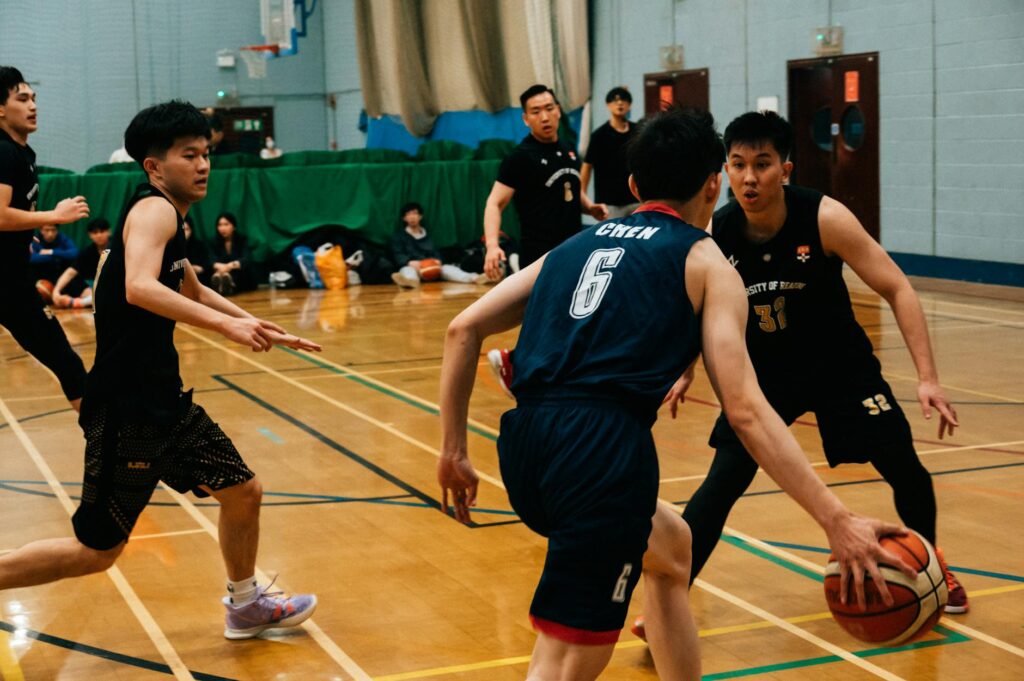
Hitting the court for LUSV basketball can feel overwhelming, especially when you’re not seeing the results you expect. You put in the effort, you practice, but something just isn’t clicking. The passes go astray, the shots don’t fall, and team coordination feels like a distant dream. It’s a common pain point for many aspiring basketball players and teams navigating the specific demands of LUSV basketball. The good news? These challenges are solvable, and unlocking your team’s potential is more achievable than you think.
This guide is designed to cut through the confusion. We’ll address the core problems you’re likely facing and provide actionable solutions, transforming your LUSV basketball experience from frustrating to fantastic. Forget generic advice; we’re diving deep into practical tips that you can implement immediately.
What Exactly is LUSV Basketball?
Before we dive into solutions, let’s clarify what LUSV basketball entails. While the core principles of basketball remain the same—dribbling, passing, shooting, defense—LUSV basketball often refers to leagues or specific formats that might have unique rules, court sizes, or player age/skill groupings. For the purpose of this guide, we’ll assume LUSV basketball refers to a particular developmental or recreational league structure focused on skill-building and enjoyable play, often for younger athletes or those newer to the sport. Understanding these potential nuances is the first step in tailoring your approach.
The primary challenge many face is a lack of clear understanding of the specific objectives or rules within their LUSV basketball context, leading to disjointed play. Without a shared vision, players can become isolated on the court, executing individual skills without a cohesive team strategy.
Common LUSV Basketball Struggles and How to Overcome Them
Let’s get straight to the heart of the matter. What are the most common hurdles you’re likely encountering, and more importantly, how do you leap over them?
Problem 1: Inconsistent Shooting Form
You see the hoop, you have the ball, but the shot just doesn’t go in consistently. This is perhaps the most frustrating aspect of basketball for many. It’s not just about getting the ball to the basket; it’s about doing it reliably under pressure. Many players develop bad habits early on that are hard to break. When I first started coaching youth basketball, I noticed many players would rush their shot, forget to follow through, or have an inconsistent base. This led to a lot of air balls and missed layups.
Solution: Focus on Fundamentals and Repetition. Consistent shooting comes from muscle memory built through deliberate practice. Break down your shot into its core components: balance, grip, elbow alignment, release, and follow-through. Practice these elements slowly and deliberately. Don’t just shoot; perform drills that isolate each part of the shot. For example, practice BEEF (Balance, Eyes, Elbow, Follow-through) without jumping, then add a small hop, and finally, a full jump shot. Repetition is key, but it must be quality repetition. Aim for 100 perfect shots, not 1000 sloppy ones.
Problem 2: Poor Ball Handling and Dribbling
Losing the ball easily, struggling to dribble with your head up, or being unable to dribble effectively with your non-dominant hand are significant roadblocks in LUSV basketball. This often stems from a fear of making mistakes or simply not dedicating enough time to practicing dribbling in varied situations.
Solution: Dribble in Different Scenarios. Integrate dribbling into your daily routine. Dribble while walking, then while jogging. Practice stationary drills focusing on hand speed and control (e.g., crossovers, between-the-legs, behind-the-back) with your eyes closed or looking away from the ball. Once comfortable, add pressure by having a friend lightly apply defensive pressure or by dribbling around cones. Using a slightly deflated ball can also increase the challenge and improve your touch. I always tell my players that if you can’t dribble without looking, you can’t effectively run an offense.
Problem 3: Lack of Court Awareness and Team Play
Players often focus too much on their individual role, failing to see the bigger picture. This leads to missed passes, players being out of position on defense, and a general lack of flow. It’s like everyone is playing their own game on the same court, rather than a team game.
Solution: Visualize and Communicate. Before and during games, consciously think about where your teammates are and where they will be. Practice off-ball movement – cutting, setting screens, and finding open spaces. Communication is paramount. Call out screens, tell teammates when you’re open, and direct traffic on defense. Watching game film, even of professional games, and identifying how players move and communicate can be incredibly insightful. I’ve found that teams that talk more, win more. It’s that simple.
Essential LUSV Basketball Drills to Boost Performance
Moving from problems to solutions, let’s look at specific drills that target key areas for LUSV basketball players. These aren’t just random exercises; they are designed to build foundational skills and tactical understanding.
1. The “Magic 5” Shooting Drill
This drill focuses on consistent scoring from different spots. Pick five spots around the basket (e.g., baseline, wing, top of the key, opposite wing, opposite baseline). From each spot, you must make 5 shots before moving to the next. The catch? You can’t just shoot uncontested shots. Incorporate a dribble move before each shot or receive a pass from a partner. This simulates game conditions and forces you to execute under slight duress.
2. “3-Cone” Dribbling Challenge
Set up three cones in a line, about 5-7 feet apart. Dribble through the cones using different moves (crossover, between-the-legs) at each cone. Focus on speed, control, and keeping your head up. Time yourself and aim to beat your previous record. Gradually increase the speed and complexity of the moves. This drill sharpens your agility and ball-handling prowess.
3. “5-on-5” Full Court Transition Drill
This drill emphasizes fast breaks and defensive transition. Start with 5 offensive players and 5 defensive players. The offense tries to score quickly. After a made basket or turnover, the defense immediately becomes the offense and sprints back to score on the opposite end. This teaches players to transition quickly from defense to offense and vice-versa, a critical component of LUSV basketball games.
Understanding LUSV Basketball Rules and Strategy
While basketball has universal rules, some LUSV leagues might introduce variations. It’s crucial to know these specifics. Are there different time limits? Modified foul rules? Different court dimensions? Always familiarize yourself with the official rulebook for your specific LUSV basketball league. This knowledge prevents costly mistakes and penalties.
Beyond rules, strategy is key. In LUSV basketball, simple, effective strategies often outperform complex ones. On offense, focus on spacing the floor, making smart passes, and attacking the basket. Don’t be afraid to use screens to free up shooters or create driving lanes. On defense, maintaining good positioning, communicating switches, and preventing easy baskets are paramount. A common mistake I see is teams trying to employ overly complex plays that they haven’t practiced enough, leading to confusion and turnovers.
The Role of Conditioning in LUSV Basketball
Basketball is a physically demanding sport. Endurance, agility, and quickness are vital. Many players focus solely on skill work and neglect conditioning, only to find themselves exhausted in the second half. This fatigue leads to poor decision-making, missed shots, and slower defensive reactions.
Solution: Integrate Conditioning into Practice. Make conditioning a regular part of your LUSV basketball training. Incorporate interval sprints, agility drills (like ladder drills), and defensive slides. Ensure your practice sessions are intense enough to mimic game fatigue. Proper nutrition and hydration also play a massive role in maintaining energy levels throughout a game. A well-conditioned player has a significant edge.
Analyzing Your LUSV Basketball Performance
How do you know if you’re improving? Tracking progress is essential. This involves more than just looking at the final score.
Solution: Track Key Metrics and Seek Feedback. Keep a simple log of your performance. Note down your shooting percentage, number of assists, turnovers, and rebounds per game. If possible, record your games. Watching yourself play can be eye-opening, revealing habits you didn’t realize you had. Ask coaches and teammates for constructive criticism. Be open to feedback, even if it’s hard to hear. Understanding your weaknesses is the first step to addressing them.
One counterintuitive insight I’ve learned over the years is that focusing less on scoring and more on making the right play—a good pass, a solid screen, a timely defensive stop—often leads to better overall team performance and individual success in the long run. When players prioritize team success, individual stats tend to follow naturally.
Frequently Asked Questions
What is the main goal in LUSV basketball?
The main goal in LUSV basketball is to develop fundamental basketball skills, foster teamwork, and provide a positive and engaging playing experience. It emphasizes learning the game, improving as an individual player, and contributing to team success within a structured, often developmental, league environment.
How can I improve my defensive positioning in LUSV basketball?
To improve defensive positioning, always maintain an athletic stance with knees bent and feet shoulder-width apart. Stay between your assigned player and the basket, and use your peripheral vision to track both your player and the ball. Communicate with teammates about screens and switches to maintain team defensive integrity.
What are the most common mistakes new LUSV basketball players make?
New players often make mistakes such as dribbling without looking up, taking contested shots without good form, poor defensive awareness, and neglecting to communicate with teammates. They might also focus too much on individual scoring rather than team play, leading to turnovers and missed opportunities.
Are there specific LUSV basketball training programs?
Yes, many LUSV basketball leagues or affiliated organizations offer specific training programs, clinics, and camps designed to enhance player development. These programs often focus on core skills, tactical understanding, and conditioning tailored to the league’s specific format and age groups.
How important is teamwork in LUSV basketball?
Teamwork is critically important in LUSV basketball. While individual skills are developed, the game is fundamentally a team sport. Effective passing, setting screens, defensive rotations, and mutual encouragement are essential for success and create a more enjoyable and rewarding experience for all players.
Final Thoughts on Elevating Your LUSV Basketball Game
Mastering LUSV basketball isn’t about a secret formula; it’s about consistent effort, smart practice, and a willingness to learn and adapt. By understanding the common pitfalls—like inconsistent shooting, weak ball-handling, and poor court awareness—and actively applying the solutions and drills provided, you’re well on your way to transforming your game. Remember to focus on fundamentals, communicate with your teammates, prioritize conditioning, and always seek to improve your understanding of the game. With dedication and the right approach, you can overcome challenges and truly enjoy the journey of LUSV basketball.